Don't Wait for the Drip: The Critical Guide to RV Roof Seal Inspections
For RV owners in Western Washington, the "off-season" doesn’t exist. While we may not be camping as much, our RVs are constantly enduring the single biggest threat to their longevity: the endless Pacific Northwest rain. As RV owners, we cherish the freedom and investment our rigs represent. However, there is a dangerous misconception that as long as it's not dripping inside, everything is fine. The reality is that your RV's roof seals are a consumable item, and their failure is inevitable if ignored. Waiting to see water stains or smell mildew means extensive, expensive structural damage has likely already occurred. Preventative maintenance is not just a suggestion; in the PNW, it is the fundamental way you protect your investment.
The Invisible Threat: Why Seals Fail Before You Notice
Your RV is essentially a giant box driving 60 MPH, subject to constant vibration, UV exposure, and temperature swings that cause the entire structure to flex, expand, and contract. The sealants and caulking holding everything together—from roof vents to plumbing stacks and side moldings—are flexible, but they have a lifespan.
In Snohomish County, our frequent wet-dry cycles accelerate this degradation. The sun cooks the sealants, making them brittle, and then the rain works into tiny, microscopic cracks. Those cracks expand through the freeze-thaw process, turning a pinhole into a path for water ingress. This ingress doesn't start as a major leak. It starts as a slow seepage that saturates the wooden subframe, insulation, and interior paneling, all hidden behind your walls or under the roof membrane.
Small Gaps, Big Problems
We don't need to guess about what to look for; we can look at some of the actual components we serviced on our trailer to demonstrate how subtle these issues can be.
Identifying 'Hidden' Seal Failures
The following images highlight areas on an RV roof that required immediate touch-up and resealing. To the untrained eye, or viewed from the ground, these locations might look adequate. They certainly weren't letting a river of water inside yet. However, a professional closer look revealed critical failure points.
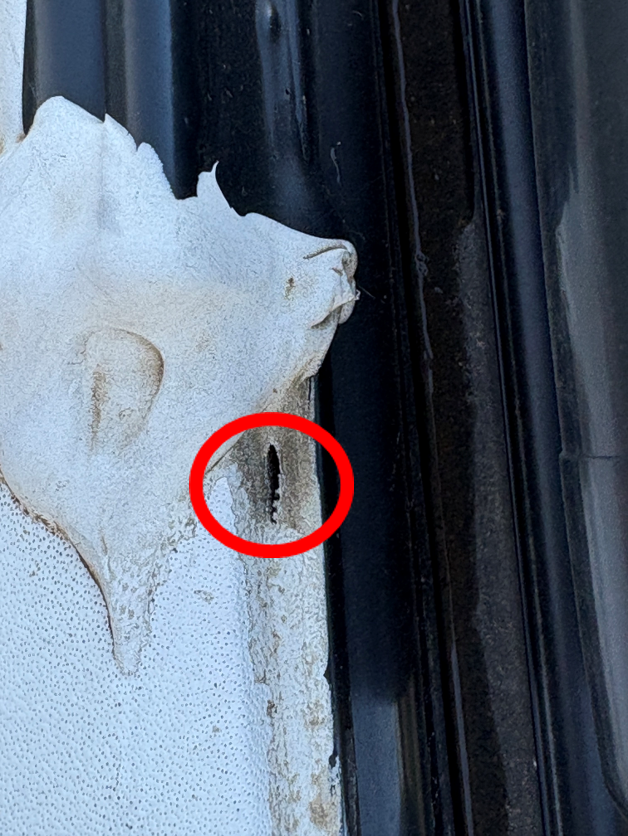
Figure 1: Adhesion Failure on critical Roof Edge. This extreme close-up view shows a critical failure point where the white non-self-leveling caulking meets the black gutter moulding right on the roof edge. Notice the clear separation and the dark, elongated crack where the caulk has completely pulled away. Because this is a vertical seam right next to the gutter, it is a catastrophic path for rainwater to run down behind the siding and compromise the sidewall frame.
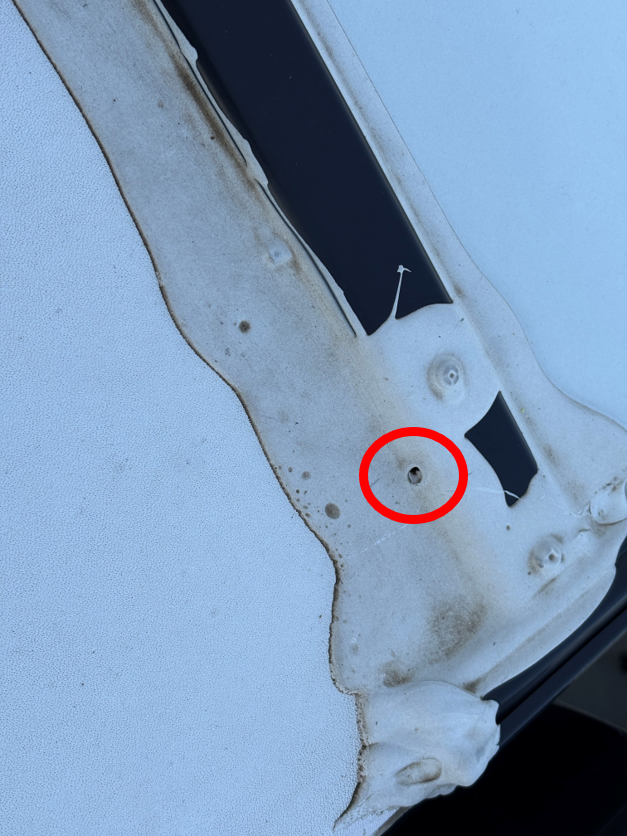
Figure 2: Pinholes and Degradation. Here is an overhead view of a section of a roof membrane showing aged sealant. While some areas look solid, this section reveals small pinholes and voids near the darker trim piece. These pinholes are all it takes for water to begin compromising the substrate below. You can see how this water path would easily miss being noticed inside, while silently rotting the structure.
Understanding the Financial Implication
Addressing the two small issues shown in these photos involves a few hours of labor, proper cleaning, and a couple of tubes of premium RV sealant. The cost of this preventative touch-up is minimal.
Ignoring these issues, however, guarantees that after a heavy winter, you will be facing soft spots in the roof, rotted wall framing, or delamination of your fiberglass siding. The repair bills for water damage are exponential compared to the cost of a routine inspection and reseal.
The Enterprise Advantage: Partnering for Long-Term Peace of Mind
Many RV owners are handy, proactive, and perfectly comfortable climbing up on the roof to handle basic upkeep. We love seeing owners take an active role in caring for their rigs! However, because sealant failure can be subtle, getting a lasting seal comes down to technical nuances that are easy to overlook.
For instance, one of the most common pitfalls when touching up a seam is applying fresh lap sealant or non-self-leveling caulk directly over older, weathered material without full deep-cleaning and surface prep. Even if the surface looks clean, invisible oils, oxidation, and trapped road grime prevent new sealant from creating a true chemical bond. Moisture can then sneak underneath the new layer, continuing to damage the subframe while hidden from view.
That’s where a professional perspective adds real value. At Enterprise Mobile RV, we take a detailed, systematic approach to roof inspections and touch-ups across Western Washington:
Proper Surface Preparation: We don't just "patch over" problem spots. We physically test sealant adhesion, thoroughly clean and prep the substrate with material-safe solvents, and remove compromised caulk so new applications form an airtight, watertight bond.
Material Compatibility: Different roof membranes (like TPO, EPDM, or fiberglass) require specific chemical formulations—such as Dicor or Alpha Systems—to adhere properly without damaging the underlying membrane. We match the exact right product to your specific setup.
Convenience Directly to You: Skip the risk of working at heights or the frustration of leaving your RV sitting at a dealership service lot for weeks during peak rainy season.
Whether you want a thorough baseline inspection before winter or simply prefer having a certified mobile tech handle the high-ladder maintenance for you, we bring professional, reliable service right to your driveway in Snohomish County.
Why Every Good Roof Inspection Starts Inside the RV
You might expect a roof inspection to start with a ladder, but a true systematic diagnostic starts on the inside. Before ever setting foot on an RV roof, I perform a thorough interior ceiling inspection. Water follows gravity—long before a roof membrane completely fails, subtle ceiling discoloration, soft spots, or seam separation inside the rig will signal hidden moisture. By documenting the interior condition first, we establish an accurate baseline, identify existing hidden leaks early, and ensure the roof structure is safe to traverse before exterior maintenance begins.
Protect your investment and enjoy peace of mind before the next big rainfall. If you'd like an expert set of eyes on your roof seals, schedule your comprehensive inspection with Enterprise Mobile RV today. We proudly serve Snohomish County and Western Washington—bringing certified quality directly to your door. For a list of our Preventative Maintenance Services